One of the most affected population group in Kamukunji Sub-County is youth living in informal settlements. Kamukunji Sub County, where SOWED Kenya is implementing Jiongoze project with support from GCERF1, has seventeen (17) informal settlements2. Youth in informal settlements are relatively disadvantaged in socio-economic outcomes such as employment. The impact of the pandemic, and especially the manner in which the government enforced containment measures such as the dusk to dawn curfew and the cordon sanitaire instituted in Eastleigh, one of the two administrative divisions in Kamukunji Sub County, increased confrontational run-ins between police and youths, a factor which further escalated conflict and tension between them. The Police Reforms Working Group-Kenya (PRWG-K3) – had warned of increasing cases of police excesses while enforcing COVID – 19 containment measures. PRWG (K) accused police of extortion, looting, beating, unfair targeting and general brutality; an approach which not only increased youth exposure to COVID -19 but also continued to characterize the history of police-youth relationship in Kamukunji Sub County.
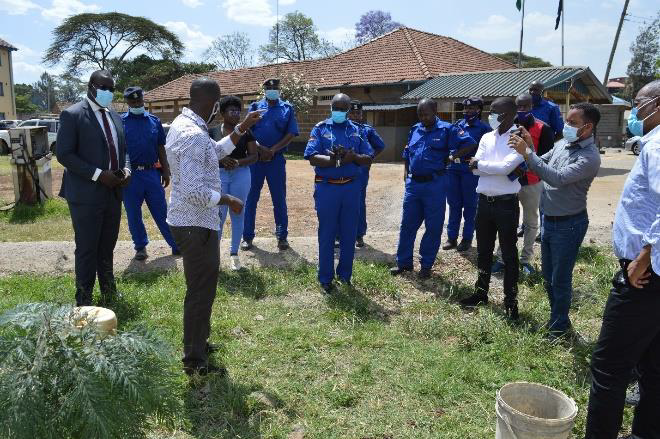
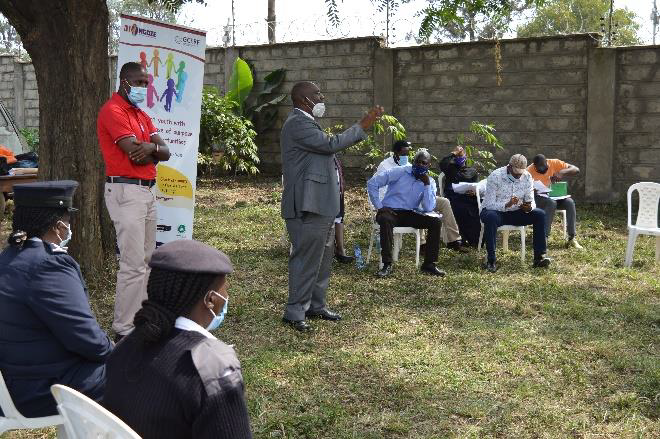
Right: Former Kamukunji Deputy County Commissioner, Mr. Moses Lilan responding to question and concerns from both police and youth leaders during the July 2020 Police-Youth Dialogue held at Shauri Moyo Police Station.
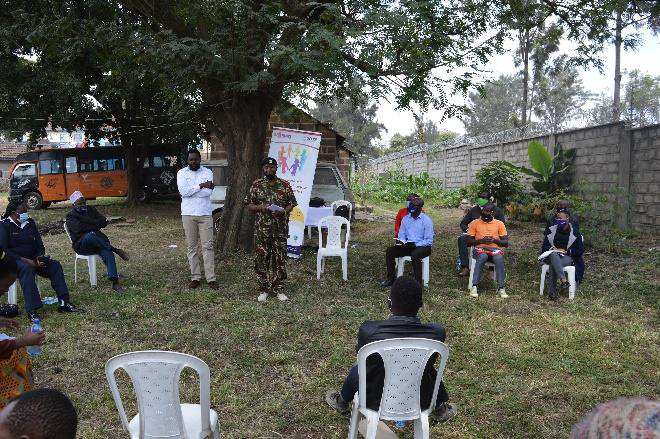
The surge in cases of police violence during the pandemic period strained an already poor police-youth relationship. These reopened wounds of healing trauma among youths caused by previous cases of police brutality such as the January 2020 killing of 24-year-old Ahmed Majid. In July 2020, a section of youth leaders affiliated to Jiongoze project noted this worrisome trend, and fearing a possible return to the dark days of violent crime and extrajudicial killings, approached SOWED Kenya to intervene. On July 23rd, SOWED Kenya convened an open-air dialogue at Shauri Moyo police station. The dialogue brought together a total of twenty-two (22) youths, National Government Administration, Office of the local Member of National Assembly and fourteen (14) police officers drawn from the Directorates of Criminal Investigations (DCI), Gender and Community Policing, the host police station and the Sub-County command based in adjacent Buruburu.
During the meeting, youths raised a myriad of key challenges, so far as their experience with local policing is concerned, which threaten and undermine efforts against crime and prevention of violent extremism. These include: unequal treatment before the law arising from criminalization of unemployment and poverty; bribery and corruption; impunity which pushes them further deeper into poverty; police harassment including unlawful detention, often times beyond the period required under the law and arbitrary arrests; lack of legal awareness which results in intimidation and harassment, and lack of legal redress for youth in conflict with the law; poor re-integration of ex-convicts and the stigma of a criminal record; high cash bail charges and court fines; unfair targeting and lack of representation in community policing and Nyumba Kumi structures as well as lack of understanding of the criminal – justice system.
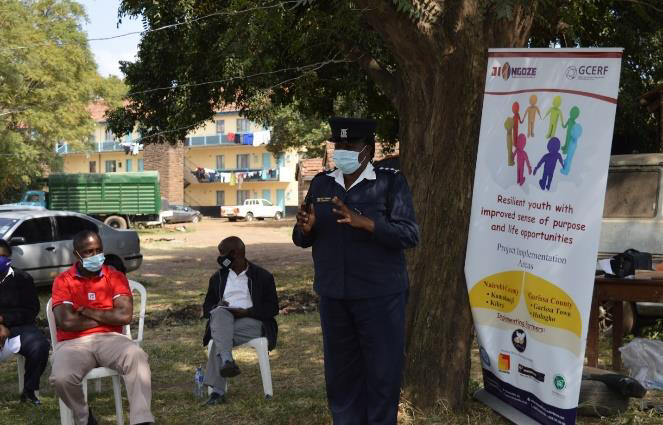
Right: Kamukunji Sub-County Police Commander, responding to questions and concerns from youth leaders during the July 2020 Police-Youth Dialogue held at Shauri Moyo Police Station.
At the center of the long running conflict is negative perception towards each other: On one hand youths viewed police officers as inept, money-hungry and violent members of the community hence christening them as ‘Warazi,’ a derogatory term describing police officers as snitches. Youths also feared being labeled ‘Mtiaji‘ by their peers if they had frequent interactions with the police. It has always been problematic to remedy the relationship due to generational gaps, cultural and language differences. The fluid nature of Sheng, make it difficult for older and or non-urban police officers to interact with youth.
On the other hand, police viewed youth generally as criminals and suspects. As a result of this complex relationship, youth stayed away from police stations and kept their interaction with police officers at the bare minimum, and when the youth had to interact with the police, it had to be absolutely necessary, and in most cases, in the presence of a respected community elder or a credible religious leader to avoid harassment. It is against this background, during the dialogue, that youth requested for establishment of a youth office in police stations dedicated to youth affairs. This is how the concept of the Station Youth Liaison Officers (SYLO) was mooted.
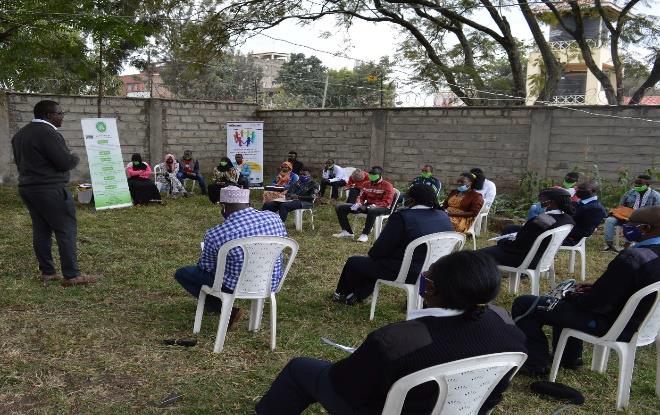
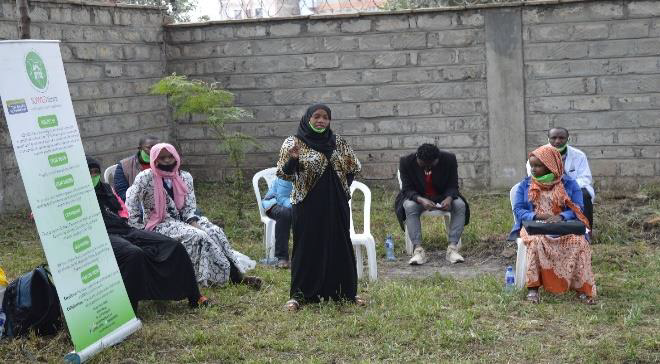
Right: A youth leader issuing comments during the July 2020 Police-Youth Dialogue held at Shauri Moyo Police Station.
Since then, the SYLO program has shown promising results in restoring the relationship between police and youths. It’s an approach that has been remarkably applauded, embraced and owned within the NPS. For instance, the Directorate of CVE and Organized Crimes, Directorate of Reforms, Directorate of Gender and Community Policing have not only developed keen interest on the program but have also requested to be enjoined in the MOU between SOWED Kenya and NPS in the national roll-out of SYLO. The Deputy Inspector General in charge of Kenya Police Service under whom police stations fall, recommended that the SYLO concept be adopted and rolled out in all urban police stations in Kenya.
The concept has also captured the attention of the State Department for Youth Affairs, Reinvent Program and the United Nations Office on Drugs and Crime’s (UNODC) Safer Cities Program who have engaged SOWED Kenya in several consultative meetings with a focus on the future of SYLO program as a game changer in combating human and drugs trafficking, organized urban crime and violent extremism, and the implementation of the Kenya Youth Development Policy 2019. The program has already been rolled out in Buruburu police station where it is gaining traction. More police stations are adopting the concept in Nyanza and Rift Valley regions.
In reality, the concept is increasing public perceptions of police legitimacy, especially amongst youths, and is contributing to the improvement of service delivery as well as police accountability thus contributing to the police reform agenda.
Today SYLOs are the station youth case managers as well as station youth advocates. They attend to youth security related issues within and outside of the police stations with a youth friendly approach therefore mediating in the conflict between the youths and law enforcers, and are invited to speak in youth forums. In the spirit of community policing, they engage youth in relationship and trust building activities including tree planting, station beautification, case and information management, periodic dialogue & mentorship, environmental clean-up and sporting activities. The tree planting ceremony at Shauri Moyo Police Station after the historic police-youth dialogue marked a truce and new beginning in the relationship between police and youths in the Sub-County.
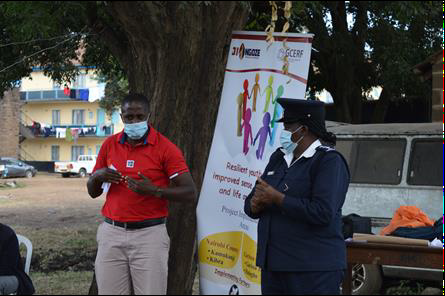
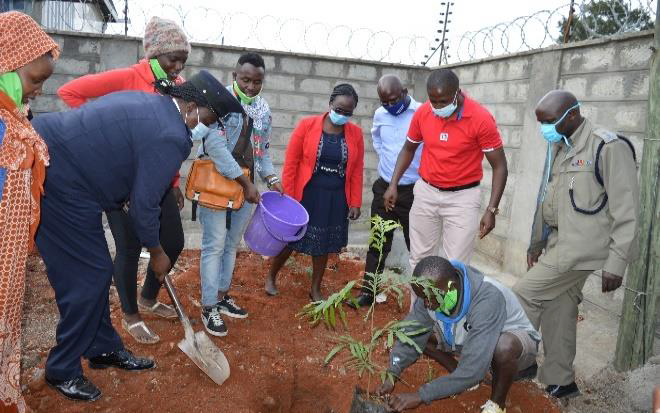
Right: Joint Police-youth tree planting activity at Shauri Moyo Police Station.
As at this point, there are five (5) SYLOs in Kamukunji Sub County at Shauri Moyo Police Station (2) and Buruburu Police Station (3). There are dedicated SYLO offices and structures in both police stations. Moreover, Buruburu Police Station has gone further to embrace the concept of a youth-friendly police station. The station has installed Wi-Fi, retrained officers on youth friendly approaches, and established linkages and a roaster with 19 local youth groups to support the station in beautification activities. The National Police Service through the Directorate of Organized Crimes and Violent Extremism has already identified 11 counties earmarked for the first phase of the national roll-out of the SYLO program in 2021 under the SOWED Kenya-NPS MoU.
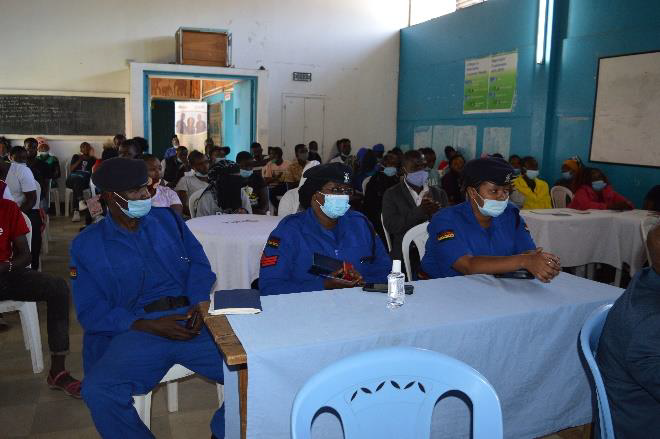
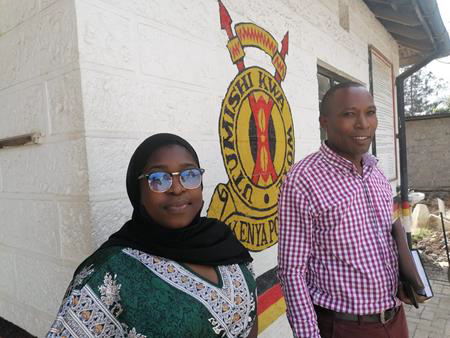
Right: The first SYLO officers Constable Defense Kale and Abraham Oraro of Shauri Moyo Police Station.
- Global Community and Engagement Resilience Fund ↩︎
- Mabatini, Kosovo, Sagana, Vihiga, Egesa, Sofia, Digo, Highrise, Mashimoni, Kanuku, Kinyago, City Carton, Blue Estate, Motheland, Sewage, Mlolongo and Mogonda ↩︎
- PRWG (K) is a consortium of 18 national civil society organizations working together with the Ministry of Interior to monitor police conduct and strengthen police accountability. SOWED Kenya is a member of PRWG. ↩︎